


Divan Del Tamarit
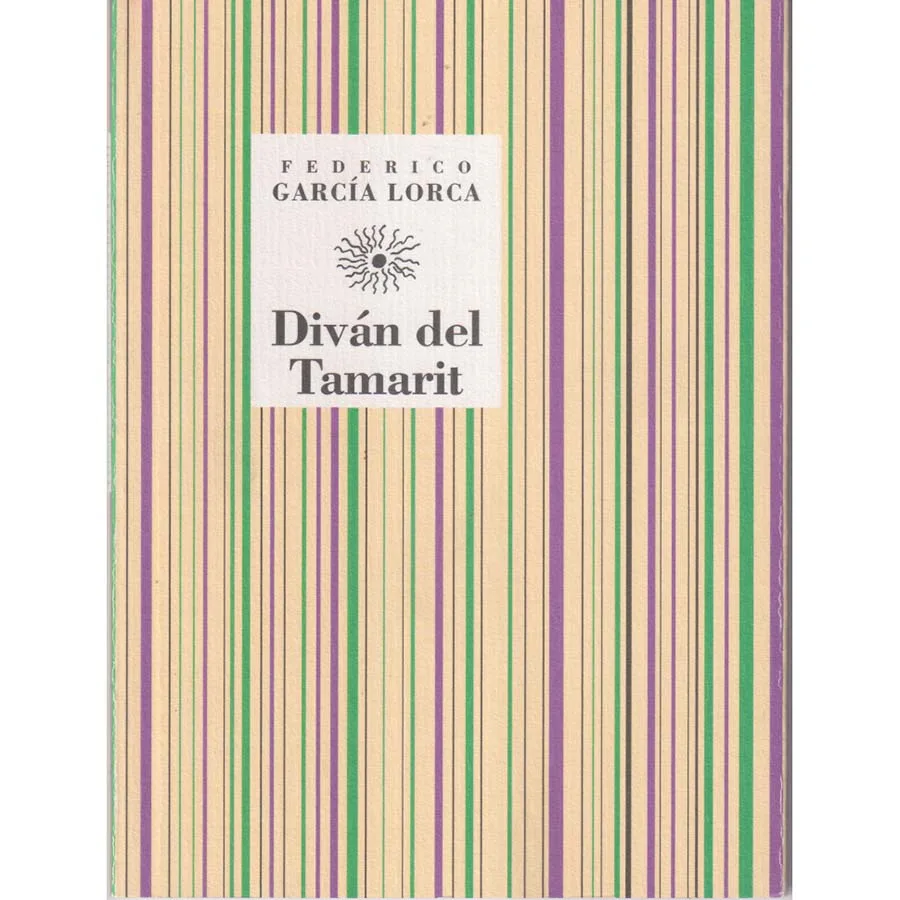
Publisher: Editorial Comares
Format: Paperback
ISBN: 9788481513943
Diván del Tamarit (1996) by Federico García Lorca. Editorial Comares. ISBN: 9788481513943. Text in Spanish. Condition: Good.
There are collections of poetry that offer gentle observations about flowers, pleasant afternoons and the occasional thoughtful cloud.
Then there is Diván del Tamarit, in which Federico García Lorca wanders into the room carrying centuries of Andalusian history, Arabic poetic tradition, impossible longing, death, desire, gardens, nightfall and enough symbolism to keep literary critics happily employed until the sun finally burns itself out.
It is, in other words, unmistakably Lorca.
Published here by Editorial Comares in 1996, this edition presents the work entirely in Spanish, exactly as Lorca wrote it. That matters more than it might first appear. His poetry does not merely communicate ideas; it breathes through the sounds of the language itself. The rhythm, repetition and musicality are inseparable from the meaning. Reading Lorca in translation is rather like admiring the Alhambra from a postcard. You understand why people are impressed.
Standing inside it is something else entirely.
Diván del Tamarit occupies a special place in Lorca’s body of work. Written during the final years of his life, it draws inspiration from the classical Arabic and Persian poetic traditions that once flourished in medieval Granada. The very title acknowledges this inheritance: a diván is a collection of poems in the Eastern tradition, while the tamarisk tree evokes the landscapes and cultural memory of Andalusia itself.
Lorca wasn’t borrowing exotic decoration.
He was rediscovering part of Spain’s own forgotten inheritance.
The result is extraordinary.
These poems feel ancient and modern simultaneously. Love becomes mysterious rather than sentimental. Loss refuses neat explanations. Dreams drift into reality with barely a warning. Nature appears not as scenery but as another participant in the emotional drama.
The moon, naturally, reports for duty once again.
One cannot help feeling that if Lorca had ever written a shopping list, the moon would somehow have found its way onto it.
Unlike some of his earlier collections, Diván del Tamarit often carries a darker emotional current. There is beauty everywhere, but it is beauty edged with uncertainty. The poems seem haunted by absence, by mortality and by desires that cannot quite be spoken openly. Knowing that Lorca’s life would be brutally cut short in 1936 inevitably lends these verses an added poignancy, though they were never intended to be read merely as prophecy.
They stand perfectly well on their own.
They simply become even more moving in retrospect.
For readers learning Spanish, this collection offers a fascinating challenge. It is certainly not beginner’s material. Lorca delights in symbolism, compressed imagery and vocabulary that often carries several layers of meaning at once. A dictionary will help with the words.
It cannot entirely explain the poetry.
That, fortunately, remains your own delightful problem.
And therein lies much of the pleasure. These are poems designed to be revisited. The first reading uncovers striking images. The second begins revealing hidden patterns. Several readings later, entirely new meanings emerge from lines you had previously thought you understood perfectly.
Poetry, unlike flat-pack furniture, generally improves when read more than once.
Editorial Comares presents the collection in a handsome, uncluttered format that allows Lorca’s words to dominate the page. There are no unnecessary distractions, no oversized commentary and no attempt to soften the experience for modern readers. The poems are trusted to perform exactly as they have for generations.
Which they do.
Effortlessly.
This copy remains in good condition, making it a wonderful addition for collectors of Spanish literature, admirers of Lorca or readers wishing to experience one of the twentieth century’s greatest poets in his own language. It is a book for slow reading, occasional bewilderment and repeated discovery—the sort of volume that quietly becomes more rewarding every time it returns to your bedside table.
From Crappy Old Books—because second-hand bookshops have always specialised in the sort of quiet miracles that algorithms struggle to recommend. One moment you’re looking for a detective novel; the next you’re holding a Spanish poetry collection inspired by medieval Arabic verse, written by one of Europe’s greatest poets and waiting patiently for someone curious enough to open it. Diván del Tamarit asks for very little beyond time, attention and perhaps a willingness to admit that not every beautiful thing needs to be fully explained before it can be enjoyed. Some books whisper. Lorca’s simply continues singing, nearly a century later, in exactly the language that first gave those songs life.
Keep browsing: See more Poetry books Other books by Federico Garcia Lorca
